
Struggling to fall asleep or stay asleep because of light, noise, or stress? A well-chosen sleep mask can make a real difference. This guide explains how to choose a sleep mask using 7 key questions, shows what makes a smart Bluetooth mask different from a basic eye cover, and highlights how Calmora™ can help with travel, background noise for sleep, and recurring sleep problems. You will also see common mistakes people make when picking a mask, how to use a sleep mask for flights and daily relaxation, and how features like light blocking and sleep audio work together to support deep, better sleep.
Whether you are dealing with city lights, a snoring partner, jet lag, or racing thoughts at night, the right mask can support a more consistent sleep routine. By the end of this article you will know what to look for in a light blocking mask, how a sleep Bluetooth mask works in practice, and how to avoid buying something that feels uncomfortable or does not solve your main sleep distractions.
7 Key Questions for Choosing Your Sleep Mask
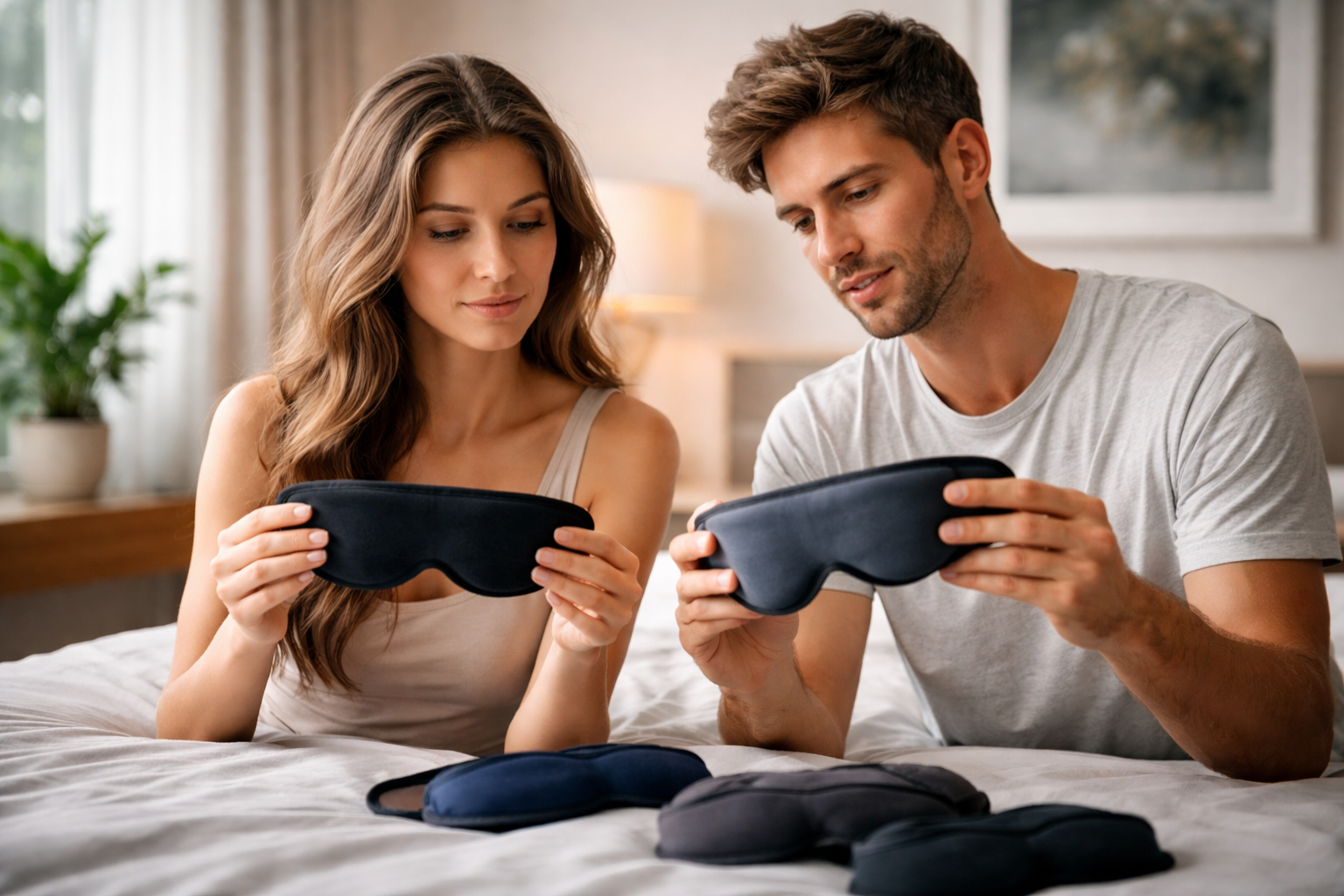
How to Choose a Sleep Mask: 7 Questions to Ask Before You Buy
1. What is actually keeping you awake?
Before you buy anything, be clear about your main sleep problems. Is it light from the hallway, early sunrise, noise from outside, or stress and an overactive mind? Different masks solve different issues, and a generic eye cover will not fix everything.
If bright light wakes you early, you need a true light blocking mask. If noise is your main obstacle, you may prefer a smart sleep mask with built-in sleep audio that can play background noise for sleep and block distractions more effectively.
2. How important is complete darkness for you?
Some people can sleep with a little light in the room, while others wake up as soon as a small beam reaches their eyes. If you are sensitive to light, you should look for a contoured, light blocking mask that seals around the nose and sides without gaps.
- Check that the mask offers full coverage above and below the eyes.
- Avoid thin, transparent fabrics that let glow through.
- Try masks with molded eye cups if you dislike pressure on your eyelids.
Good darkness supports deep sleep and can help you fall asleep fast, especially if you work late, live in a bright neighborhood, or go to bed before everyone else in your home.
3. Do you need help with noise and mental chatter?
For many people, the problem is not only light. Traffic, TV in another room, or a loud environment on a plane can keep you wired. Others lie in bed replaying the day, struggling to relax enough to reach quality sleep.
A smart sleep mask with Bluetooth and integrated speakers can address both issues at once. You can play white noise, ocean waves, soft music, or guided relaxation directly from the mask. This combination of darkness and soothing sound creates a stronger barrier against sleep distractions and supports better sleep even in difficult surroundings.
4. How does the mask feel on your face?
Comfort is one of the most overlooked factors in choosing a sleep mask. If the fabric is rough, the strap digs in, or the mask presses hard on your eyes, you will wake up repeatedly or rip it off during the night. Sleep comfort is not a luxury; it is essential.
- Look for soft, breathable materials that do not irritate the skin.
- Choose adjustable straps that stay put without pulling hair.
- Make sure the mask sits securely while allowing you to blink freely.
If you are buying a sleep mask for flights, comfort becomes even more important. Air cabins are dry and cramped, so a lightweight mask that does not press on your face will give you a much better chance of real rest during travel.
5. How do you plan to use the mask during travel?
Sleep while traveling is usually more fragmented because of unfamiliar beds, new time zones, and constant announcements or conversations around you. If you travel often, your sleep mask needs to be compact, durable, and quick to adjust in tight spaces.
A mask that combines light blocking with sleep audio is especially helpful on flights and trains. You can put it on, start your favorite background noise for sleep, and create a small personal bubble even if the person next to you keeps their reading light on.
7 Key Questions to Pick Your Perfect Sleep Mask
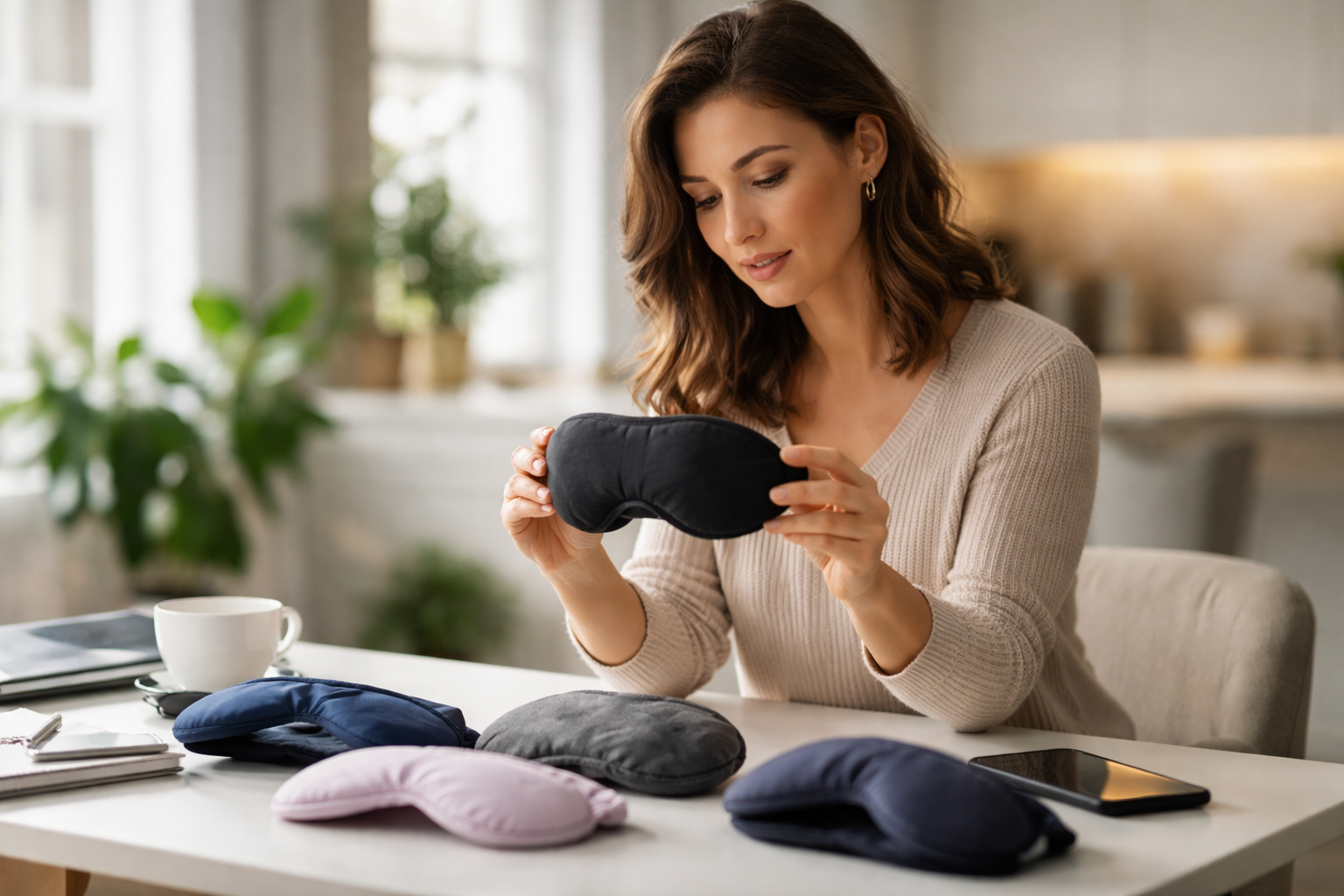
6. Do you want simple fabric or smart Bluetooth features?
Traditional eye masks only block light. A sleep Bluetooth mask adds more tools to your routine by pairing with your phone for audio. This allows you to play sleep tips, meditations, or playlists without juggling separate headphones that may hurt your ears when you lie on your side.
If you often listen to podcasts or calming tracks to unwind, a Bluetooth sleep mask reduces clutter around your pillow and keeps your focus on resting rather than managing devices. For people who rely on guided audio to relax, this can be a major upgrade in daily sleep solutions.
7. How easy is it to set up and maintain?
A complicated device is unlikely to become part of your nightly routine. When comparing options, check how long the battery lasts, how quickly it pairs via Bluetooth, and whether any parts are removable for cleaning.
You want a mask that you can charge, adjust, and use in a few simple steps. The easier the process, the more consistently you will use it, which is crucial if you want to improve deep sleep and build better sleep habits over time.
Why Calmora™ Stands Out as a Smart Sleep Mask
Light blocking and comfort in one design
Calmora™ was created with a single goal in mind: helping you sleep better, faster, and deeper. Its light blocking mask structure is built to shut out even faint light from street lamps or early sunrise, making it easier to reach and maintain deep sleep.
The materials are soft and adjustable, so you can shape the fit around your head without putting pressure on your eyes. This balance of structure and comfort supports long nights, short naps, and sleep while traveling without constant adjustments.
Integrated sleep audio for fewer distractions
Built-in Bluetooth speakers allow Calmora™ to double as a source of sleep audio. You can connect your phone and play white noise, soft music, or calming nature sounds directly through the mask. This reduces the impact of outside noise and supports a smoother transition into sleep.
- Immersive audio helps mask sudden sounds that would normally wake you.
- You do not need separate earbuds that press into your ears on the pillow.
- Different audio options let you experiment and find what relaxes you most.
For people who deal with stress and sleep difficulties, having both darkness and guided sound in one device can turn bedtime into a more inviting, predictable ritual.
Practical steps to use Calmora™ at home and on flights
- Charge and pair the mask using Bluetooth so it connects quickly to your usual device.
- Select audio that matches your mood, such as gentle rain, soft instrumental music, or a sleep-focused playlist.
- Adjust the straps for a secure but gentle fit, then check that no light leaks in around the nose.
- Lie back and relax while the combined darkness and sound help you fall asleep fast and stay asleep longer.
The same process works whether you are winding down in your bedroom or settling into a seat with your sleep mask for flights. With practice, putting the mask on can become a clear signal to your body that it is time to rest.
Common Mistakes to Avoid When Choosing a Sleep Mask
Ignoring light leakage
Many low-cost masks leave gaps near the nose or sides, which let in just enough light to disturb your rest. Partial coverage might feel fine at first, but over time it can prevent you from staying in deep sleep and limit the benefits of the mask.
When you try or buy a mask, press gently around the edges to check for leaks. A true light blocking mask should keep the area in front of your eyes dark, even if a lamp is on in the room.
Overlooking audio integration
If you already listen to background noise for sleep, buying a plain mask and separate headphones can make bedtime more complicated. You may end up dealing with tangled cords or earbuds that fall out during the night.
A sleep Bluetooth mask integrates both features in one step. This keeps your setup simple and leaves your focus on relaxing rather than on managing extra devices.
Choosing stiff or bulky designs for travel
Some masks look luxurious but are thick, heavy, or difficult to adjust in a small airplane seat. For sleep while traveling, stiffness quickly turns into discomfort, especially on long flights.
Select a mask that folds easily, fits in a small pouch, and still offers real sleep comfort when you lean against a window, headrest, or travel pillow.
Final Thoughts and Next Steps for Better Sleep
Bringing it all together
Choosing a sleep mask is easier when you ask the right questions. Think about your main sleep problems, how sensitive you are to light and noise, how often you travel, and whether you want smart features like Bluetooth sleep audio. A well-designed light blocking mask can support deep sleep, while a smart sleep mask such as Calmora™ adds immersive sound and extra comfort to your nightly routine.
By avoiding common mistakes like ignoring light leakage, neglecting comfort, or skipping audio integration when you clearly need it, you give yourself a real chance at better sleep. Even small upgrades in darkness and noise control can reduce stress and sleep disruptions over time.
Where to learn more and keep improving your routine
If you want to keep exploring ways to improve sleep problems with practical tools, start by reviewing a detailed guide on how to choose a sleep mask, then combine that knowledge with realistic sleep tips you can apply at home. Many people find that pairing a smart sleep mask with consistent bedtimes, dimmed lights, and calming audio turns bedtime into something they actually look forward to.
From there, you can compare different sleep solutions, read user stories, and see how others use sleep masks for flights, shift work, or busy households. Use these insights to build a routine that fits your life, supports quality sleep, and helps you wake up more rested and focused.
When you are ready to take the next step, explore the product details for a smart Bluetooth sleep mask, browse practical sleep tips, read the blog for more ideas, and visit the support section if you have questions about setup or care. With the right information and the right mask, better sleep is a realistic, achievable goal rather than a distant wish.
0 comments